


Taste of Morocco
"Eating in Morocco" – Moroccan cuisine, like French and Chinese cuisine, enjoys a world-renowned reputation. If your understanding of Moroccan food is limited to various traditional tagines and couscous, you are far from the truth. In Morocco, the streets, alleys and markets may also hide a variety of Moroccan delicacies: whole roasted lamb, fried fish, grilled lamb chops, camel meat, tripe, snail soup, avocado juice, prickly pear... the list goes on. Let us take you to integrate into the local life, experience it in depth, and start your local food discovery journey.
Morocco also embraces cuisines from all over the world. Whether you want to taste authentic French food, Mediterranean flavors, or Southeast Asian delicacies... you can find top restaurants and delicious food in Morocco. Let us take you to taste the flavors of Morocco's best restaurants and the creative dishes of master chefs. Of course, the artistic dishes are inevitably matched with a comfortable dining environment. Here you can find minimalist style, landscape restaurants, outdoor dining, private gardens... nature combined with decoration, decoration integrated into nature, the collision of classic and modern. Let us take you there to experience and taste the world's delicacies.
Let us travel through Morocco with our taste buds, and understand the cultural rituals and ethics that Moroccan food brings to the local people's life from various aspects of Moroccan food. In-depth experience is the essence of travel. Let us start with tasting Moroccan food!
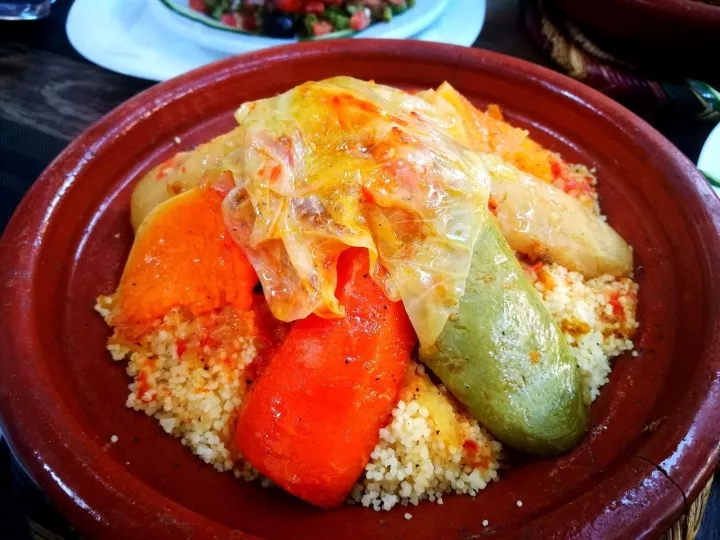
Couscous:
This dish features couscous, the only staple rice-like food in North Africa. It’s steamed in chicken broth, then lightly coated with aged butter and steamed again—this process is repeated three times. Once the natural sweetness of the chicken broth and the rich aroma of butter have fully infused the couscous, a variety of meats, vegetables and sauces are poured over it. The final couscous has a bright golden-orange hue, much like millet rice. The couscous itself is ordinary in texture, but the chicken soaked in the flavorful broth is absolutely delicious!
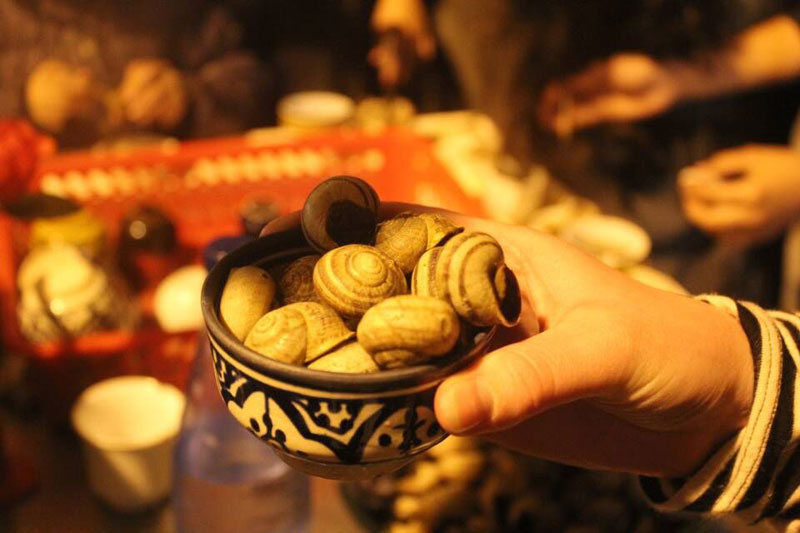
snail soup:
Escargots, a staple of French fine dining, are also a hugely popular street snack in Morocco—though prepared in a distinctly different way. Moroccan-style escargots are simmered in a large pot with more than a dozen spices until the flavors fully infuse the shells and flesh. You suck the escargots out along with the savory broth, which has an herbal note, and the texture and taste are quite similar to shiitake mushrooms.
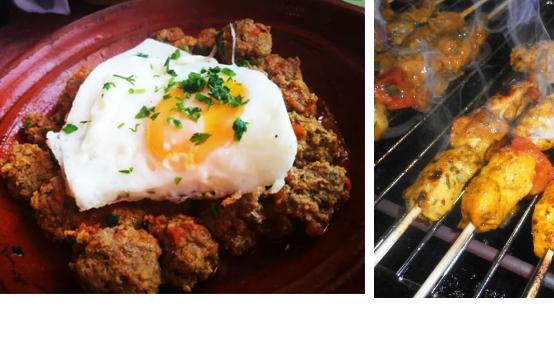
Meatballs/Grilled Meat:
Moroccan meals are generally large and generous in portions. For example, their meatballs are made with pure meat, without a single bit of flour added! The grilled meat is also served in huge chunks. Meatballs and grilled meat are not unique Moroccan specialties, but they’re a great option if you’re tired of the other dishes~
Morocco is a country where beef and lamb are staple meats, so they’re common finds in local markets. Lamb is skewered on bamboo sticks with pieces of onion and green pepper, grilled to perfection, then sprinkled with cumin—absolutely delicious. The lamb has a rich, meaty texture and a nice chew, and the combination with onion and green pepper brings a unique and wonderful flavor.
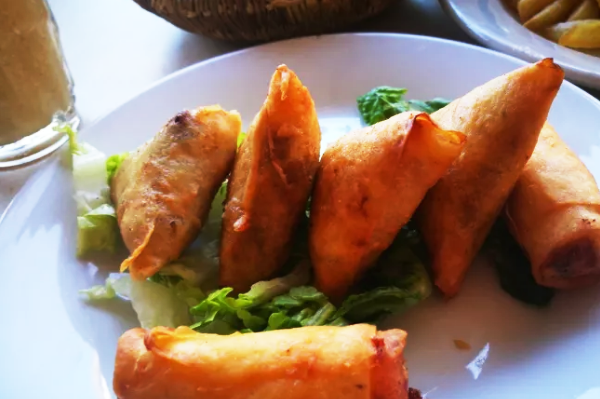
Briouat:
It's a classic Moroccan appetizer with a rectangular pastry crust, which is rolled into a triangle and either fried or baked in the oven until golden brown. The filling includes minced meat, fish, vegetables and more. It has a crispy texture and an irresistible aroma, and you can taste a hint of sweetness when eaten hot.
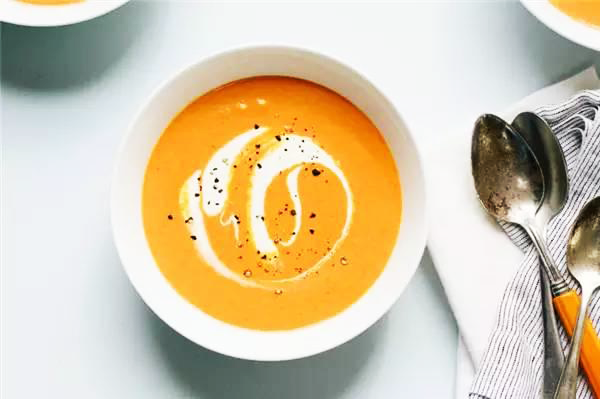
Bessara (a type of fava bean soup):
A hearty bowl of fava bean soup with crusty bread (khobz) is a favorite breakfast among office workers, costing only $0.59 (about 3.6 RMB). In some small eateries, a splash of lemon olive oil is poured into the bowl of fava bean soup, with a pinch of cumin and chili powder sprinkled on top, and it can serve as a lunch. The soup is also loaded with garlic, and once the street vendors sell out of this fava bean soup, they can pack up their stalls for the day.
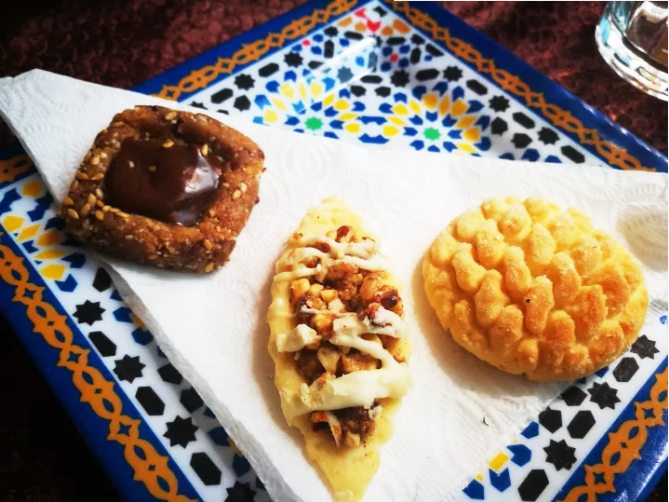
Nuts/Cookies:
Nuts are abundant in this region as it’s a major nut-producing area. Mixed with butter, the nuts are baked into assorted-shaped cookies, drizzled with local jam or chocolate sauce, and paired with sweet mint tea—pure bliss and relaxation~
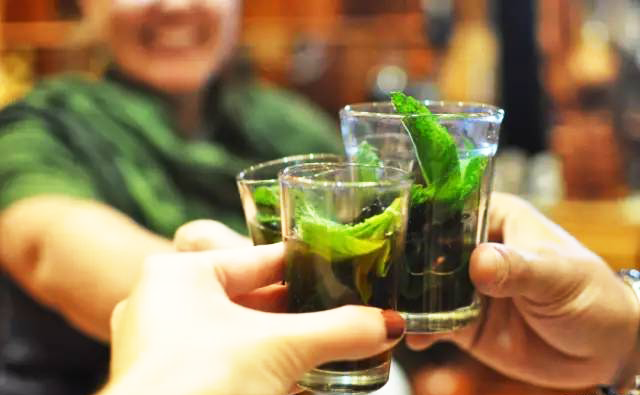
Mint tea:
It is Morocco's national tea, enjoyed by the locals all year round, who proudly refer to mint tea as "Moroccan whiskey". In fact, Morocco's tea-drinking history has endured from the 19th century to the present. Patience is required when drinking mint tea, as there is a corresponding tea etiquette to observe before sipping. Mint tea falls into the category of green tea, made with green tea infusion, sugar and fresh mint leaves besides. The brewing method is quite interesting: steep green tea in hot water, strain out the tea leaves, then add fresh mint leaves. Hold the silver teapot high and pour the tea into glass cups, with plenty of white froth rising up being the mark of a perfect pour. The brewed tea has a delicate fragrance of both green tea and mint, tasting sweet and refreshing. Additionally, other spices such as rose, clove and jasmine are often added to enrich the flavor.
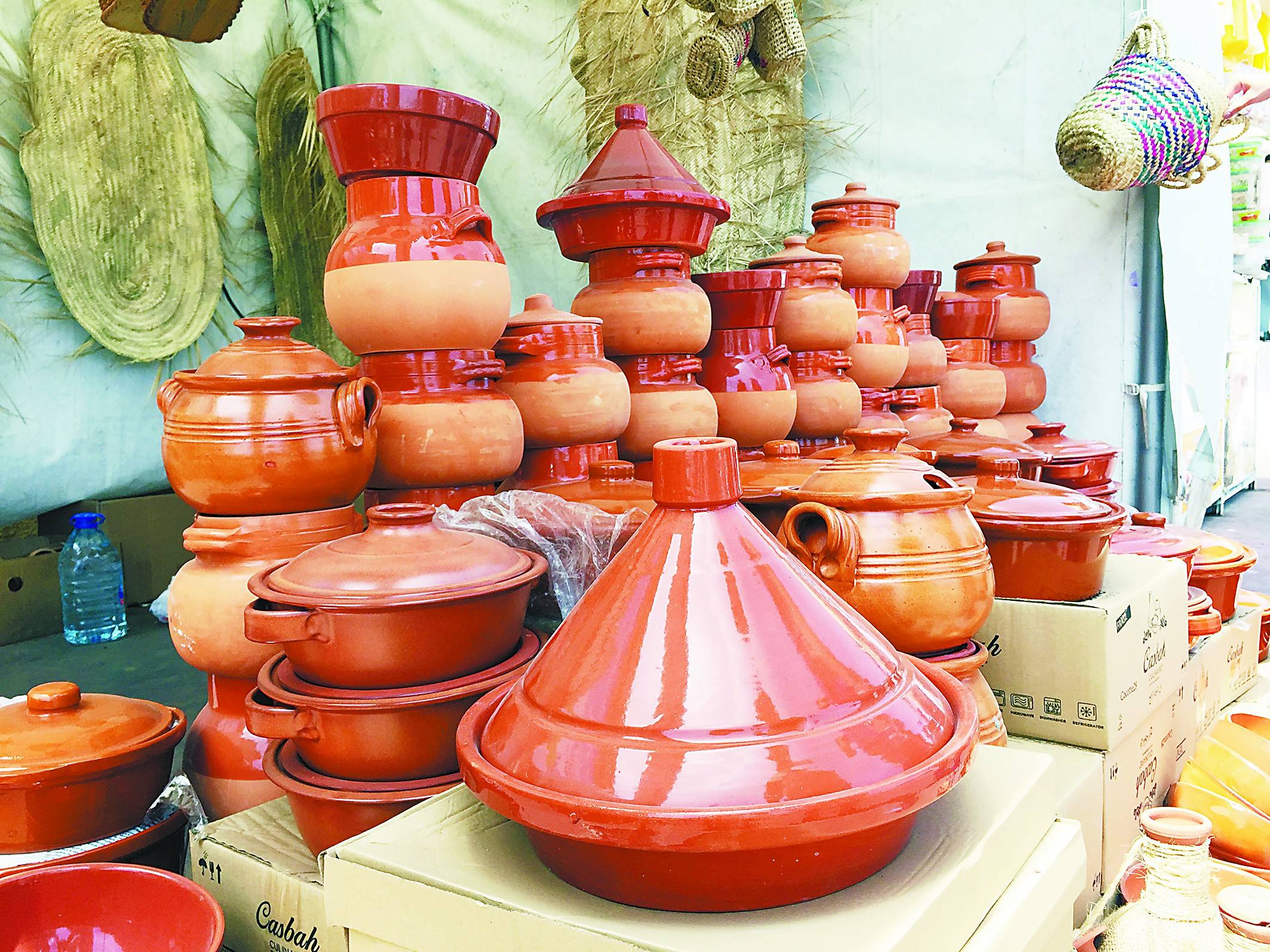
Tajine:
Tajine, a red round clay pot with a lovely conical lid like a small hat, is originally a traditional Moroccan cooking vessel, and now the dishes cooked in it are named after it. Tajine is usually used to braise chicken, beef, lamb or seafood, simmered with Moroccan spices for several hours. The cooked food has a perfect tender texture, and the locals love to eat it with pita bread. It is also a must-have dish for celebrations.
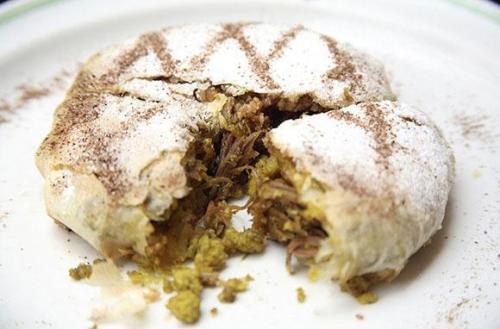
Bastilla:
Bastilla is a famous Moroccan festival dish, yet its preparation is extremely elaborate and takes four to five hours. First, chicken is simmered with Moroccan spices and cream, then deboned and chopped. Next, almonds are blanched and peeled, toasted and crushed, then simmered on low heat with onions and eggs. Finally, layers of chicken, almonds, onions, eggs, sugar and seasonings are spread out, wrapped in pastry and baked in the oven, and a generous sprinkle of cinnamon powder is added once it’s out. It boasts a rich, multi-layered taste that lingers on the palate long after tasting.
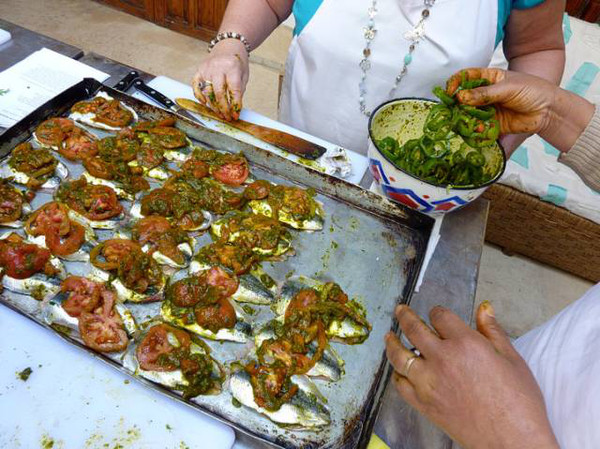
Spicy Sardines:
Morocco is the world's largest exporter of sardines, which are practically the national food of the country. Stuffing sardines with a spicy sauce called chermoula or frying them are the locals' favorite ways to prepare them. If you can't get enough of spicy food, you might as well try this classic Moroccan delicacy.
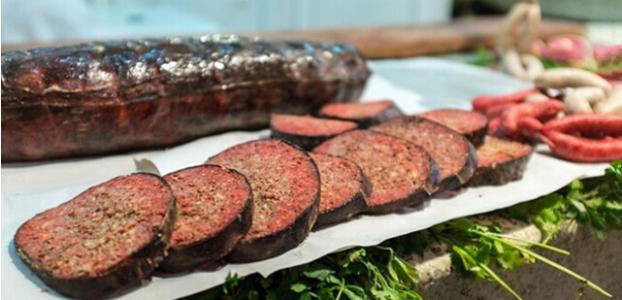
Stuffed camel spleen:
If you're an adventurous foodie who dares to try new things, come and sample this camel spleen sausage! The fresh camel spleen is stuffed with a mixture of beef, lamb or camel meat, then blended with olive oil, aromatic spices and a touch of camel hump fat. The whole stuffed spleen is roasted in the oven, sliced and then grilled again to create this iconic Moroccan specialty. It boasts a smooth and delicate texture with a flavor reminiscent of beef liver.
Morocco Circuit Tour

Contact for private tours
- Working Hours

For WeChat contact, please scan the QR code.

Climate & Temperature